
2026 marks the 20th anniversary of the Backyard Habitat Certification Program, and Tualatin resident Pamela Golafshar is transforming her yard into a certified habitat—a natural renovation that has steadily grown into a passion project.
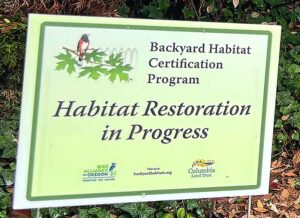
“The more I learned, the more it grew into this passion project,” Golafshar said. “It’s not just about supporting pollinators; it’s about supporting the whole biodiversity and indigenous wildlife.”
The Backyard Habitat Certification Program, a collaboration between the Bird Alliance of Oregon and the Columbia Land Trust, started in 2006 as a “collaborative experiment in a West Portland neighborhood,” according to Technician Supervisor Kate Kauffman.
“It began there in a really small neighborhood, and we expanded into Portland in 2009, and that’s when we also became a collaborative program between Columbia Land Trust and Bird Alliance of Oregon,” Kauffman told Tualatin Life. “Washington County was in 2019.”
The program aims to create community greenspaces made up of native Pacific Northwest plants and wildlife within urban environments. Since expanding into Washington County, Kauffman said many Tualatin residents have pledged to modify their yards.
“There definitely is more interest in Tualatin, and the city itself is incredibly dedicated to our program,” Kauffman said. “Tualatin just recently started funding us, so taxpayer dollars go toward our program, and so they’re very invested in people getting involved.”
Tualatin entered into an official partnership with the program in 2024 and renewed it in 2025, signing a three-year contract that provides $10,000 annually. The program also recently certified the area around Tualatin’s micro-hydro turbine project (tinyurl.com/3cafvbev) after Tualatin High School students revegetated the space.
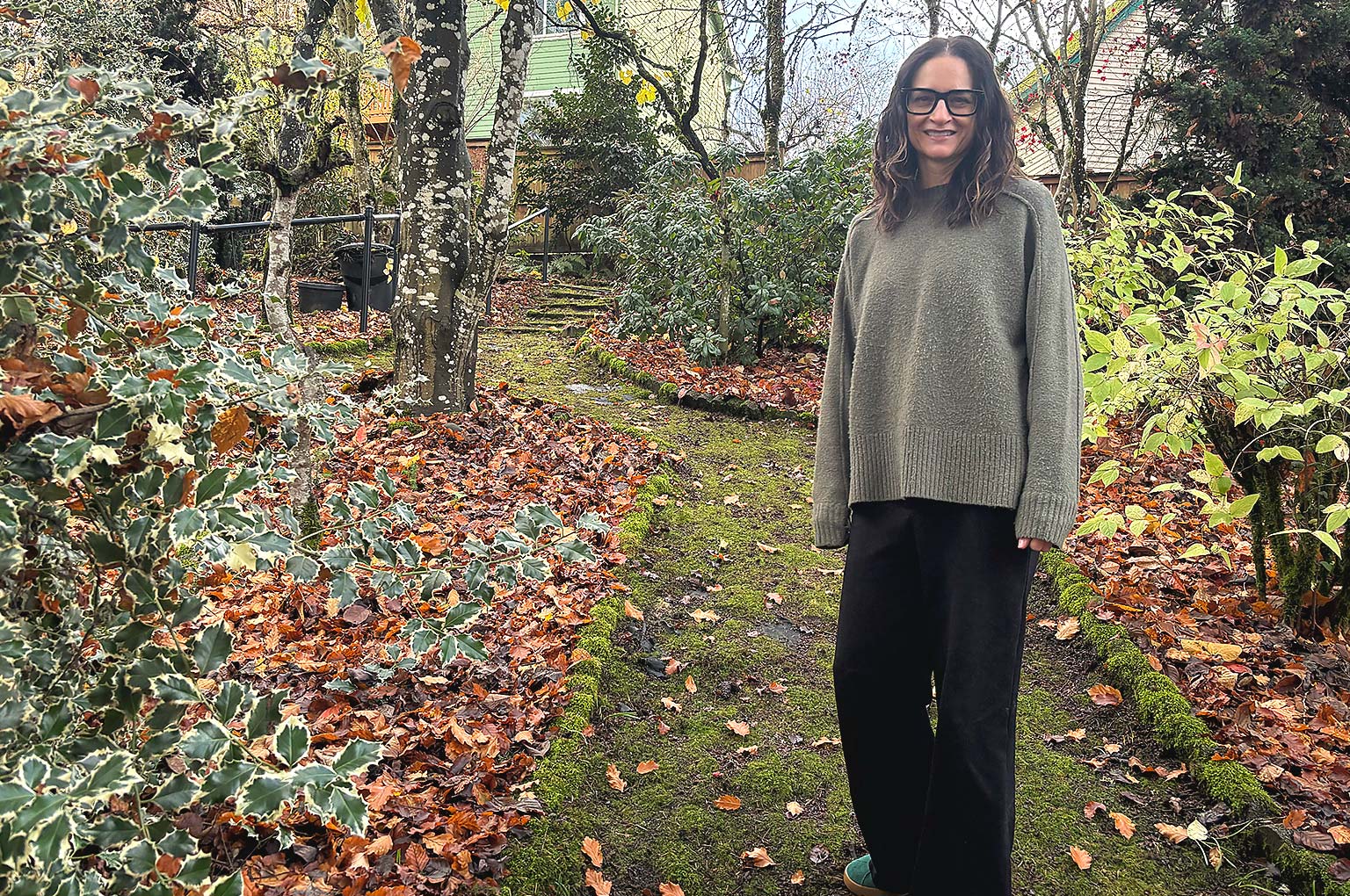
Among the local homeowners enrolled is Golafshar, who moved into her home on Tualatin’s eastside in 2022. She initially envisioned adding a few pollinator-friendly native plants to her already eclectic garden, though the effort quickly evolved into an educational experience in curating a biodiverse microecosystem.
“Native plants are actually beneficial in more ways to wildlife and the microecosystem at large,” Golafshar said. “The most surprising thing about this whole process for me is how much I am learning about everything.”
During a tour of her expansive yard, Golafshar pointed to areas where she had made decisive changes in the soil.
“You can see along here,” she said, gesturing to the dense vegetation lining an outside stairway. “This curve used to be bushes, and they were pretty, but I have switched them out with goat’s beard, which benefits hummingbirds.”
Her yard already boasted an impressive library of native species—some still just seedlings—including Oregon grape, snowberry, mock orange bushes and strawberries. At another section of the property, she stopped beside a large pile of English ivy she had pulled up after realizing how aggressively the invasive species threatens surrounding plants.
“They kind of take over,” she said. “They compete for the same resources as native plants, but they are especially conducive to just taking over and killing whatever’s around it.”
While Golafshar’s yard is still awaiting official certification, Kauffman visited last spring to review her progress and offer guidance on transitioning the landscape gradually.
“[Golafshar] inherited another person’s really amazing garden, but it’s all ornamentals,” Kauffman said. “She can talk about what succession looks like and not taking it all out.”
Ornamental plants, typically chosen for visual appeal, are discouraged by the program because they lack native origin and offer limited value to local wildlife.
“The design was very Asian-themed,” Golafshar said of the original garden. “It was very thematic and, like I said, there was a lot of thought put into the design which I really appreciated, but here in the Pacific Northwest those plants aren’t benefiting the local wildlife as much as they could.”
Backyard habitats are certified on a tiered basis. The entry level, silver, requires dedicating at least 5% of a yard to naturescaping, removing priority invasive weeds, and limiting pesticide use to program-approved methods. Gold and platinum tiers scale up based on weed removal and the percentage of the yard dedicated to native habitat, with platinum yards typically reaching around 50% coverage.
“Gold gets maybe twice as challenging as silver, and then platinum is a long reach for people that are really dedicated,” Kauffman said.
Golafshar looks forward to seeing her first phase of naturescaping take shape next summer and in the seasons ahead.
“My goal is to get to the platinum level, of course,” she said. “I wanted to take a more thoughtful approach and really think about what this could be, and so this is very much a work in progress… Spending time outside in the soil is my happy place; it’s almost like meditation.”
More information about enrolling in the Backyard Habitat Certification Program is available on its website at backyardhabitats.org/enroll.