


Residents and businesses in Tualatin face significant disruption as TriMet proposes sweeping transit changes to address a $300 million budget shortfall, with the southern suburbs among the hardest-hit areas in the metro region. The cuts and changes are described in detail at trimet.org/servicecuts.
The August 2026 cuts will completely eliminate Line 97 along Tualatin-Sherwood Road, severing the direct rush-hour connection between the Tualatin WES station and Sherwood Plaza. For commuters who relied on this route to reach work, school, or medical appointments, alternatives will require multiple transfers or longer travel times. The loss particularly affects Sherwood residents who depend on transit connections to the WES commuter rail system.
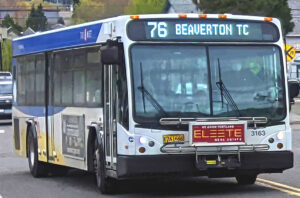
Line 76 service between Legacy Meridian Park Hospital in Tualatin and Oregon City will also be discontinued, cutting a critical healthcare access route. This poses particular challenges for transit-dependent residents seeking specialized medical care, elderly patients, and those without reliable vehicle access. The hospital serves as a major employment hub, and workers relying on transit may face difficult commutes or job losses.
The restructuring of Lines 37, 38, and 96 will fundamentally reshape how Tualatin residents connect to Portland. Line 37 will be eliminated entirely, while Line 96 shifts from Interstate 5 to replace it on Boones Ferry Road, serving Mountain Park and PCC Sylvania. However, Line 96 will operate only during peak commute hours with limited stops between Barbur Transit Center and downtown Portland, leaving midday, evening, and weekend riders without options. These route changes may strand entire neighborhoods, creating “transit deserts” where residents suddenly find themselves a mile or more from the nearest stop—too far to walk reasonably, especially in car-oriented suburban environments.
Line 38’s truncation at Barbur Transit Center, rather than continuing to downtown Portland, means Tualatin commuters will need to transfer to reach their final destinations, adding time and inconvenience to already lengthy trips. The elimination of direct service from McNary Parkway particularly affects residential areas in north Tualatin.
For local businesses, the cuts threaten employee recruitment and customer accessibility. Restaurants, retailers, and service providers that depend on transit-accessible workers may struggle to maintain staffing. The restrictions on LIFT paratransit service that accompany these cuts will also reduce mobility options for residents with disabilities.
Low-income families, students, and seniors without cars will be disproportionately affected, potentially limiting access to jobs, education, and essential services. The timing—during rush hours only for remaining routes—makes non-traditional work schedules nearly impossible for transit users. Shift workers are especially vulnerable since reduced frequencies often mean elimination of early morning, evening, or weekend service.
Tualatin may become less competitive regionally as workers and businesses choose locations with better transit connections. Environmental impacts worsen as vehicle miles traveled increase, along with traffic congestion, parking demand, and carbon emissions. Emergency services may see increased call volumes for medical transport from those who previously used transit for healthcare access.
How do these changes impact you or someone you care about? TriMet is accepting public feedback, with final approval expected in April. To comment on these proposed changes, email your thoughts to hello@trimet.org and boardtestimony@trimet.org or call 503-962-7505. For communities already underserved by transit, these cuts represent not just inconvenience but a fundamental reduction in economic opportunity and quality of life.