
A University of Oregon architecture class recently presented a torrent of ideas for how downtown Tualatin could become a vital destination for people to live and play.
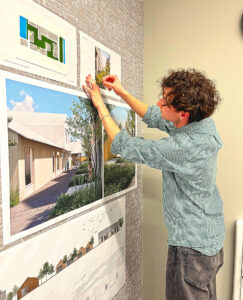
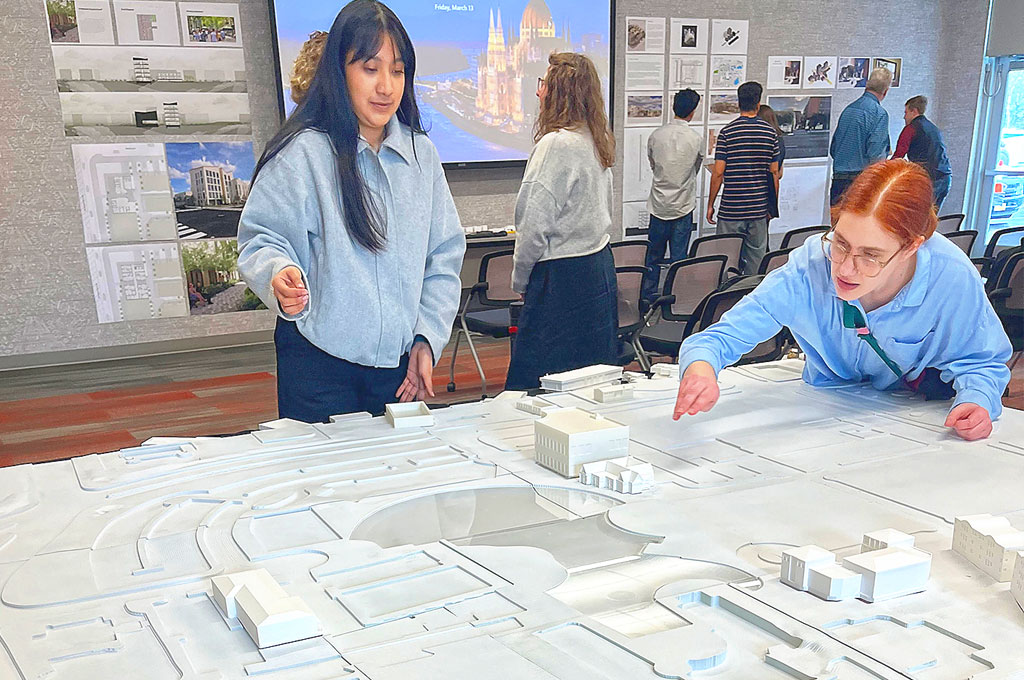
They outlined their river of suggestions in 14 presentations, separately given two at a time, in a symposium on March 13 at Tualatin’s City Services Building on Southwest Herman Road. The presentations amounted to their final exams in a seminar-like class known as a design studio.
The exercise was intended to visually flesh out architectural perspectives on what it would take for the city of Tualatin to fulfill its mission to rejuvenate the city’s downtown for decades to come.
While the students’ notions extend in countless directions, they express some notable common denominators, said Sebastian Guivernau, an adjunct UO professor and Portland urban-design consultant who taught the course.
For starters, many designs envision the district as a “village within a village,” where residents can meet most of their regular needs without leaving its confines and others not living there can visit the district to enjoy amenities such as restaurants and boutique shops.
A brewpub, commercial gym, convenience store, hardware store, health clinic, pet-grooming shop, and pharmacy are among suggestions for the lineup of uses – or, in architectural lingo, program – that might meet most residents’ regular needs.
Guivernau suggested that many concepts are based on residents being remote workers who get most of what they need on foot and who leave the self-contained district less frequently for destinations such as major grocery stores.
“Everyone’s creating a little oasis,” he said.
Second, many concepts incorporate what presenters refer to as biophilia – human connections with plants, natural materials and views of nature.
Leafy pedestrian corridors engage residents and visitors who stroll among the district’s locales and link them to the city’s developing nearby park, affording direct access to the Tualatin River.
In one design, an apartment building’s residents each enjoy rights to use a garden plot measuring 8 feet by 4 feet. In other designs, lush plant life grows on building rooftops. Farmers markets show up in more than one concept, as do greenhouse-style buildings.
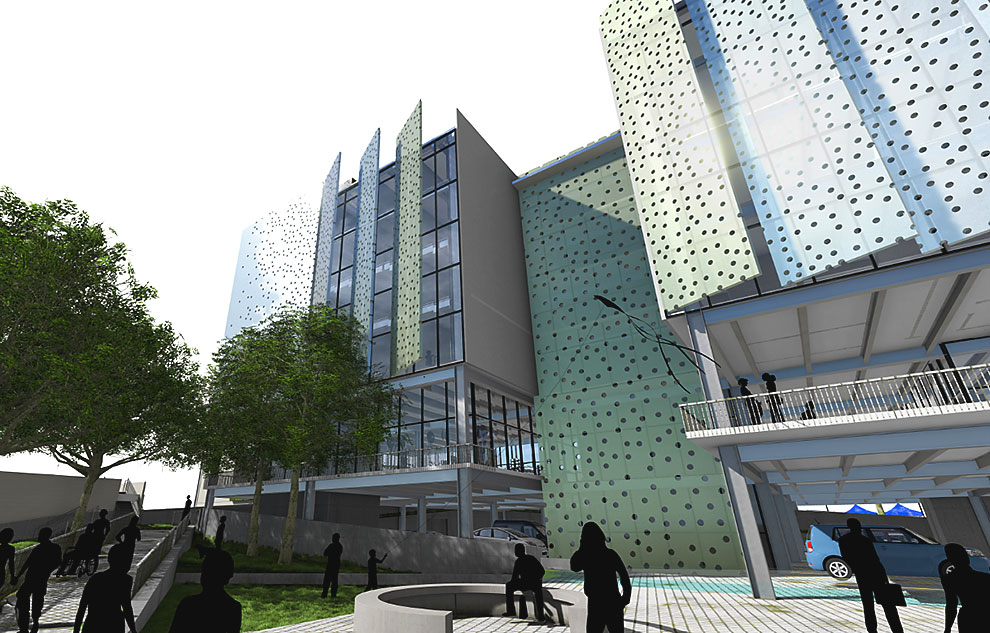
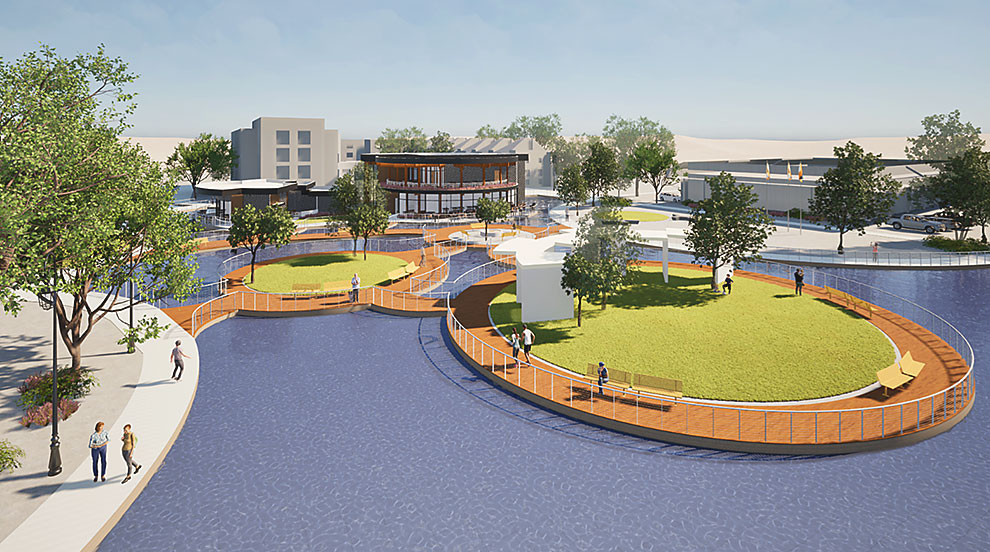
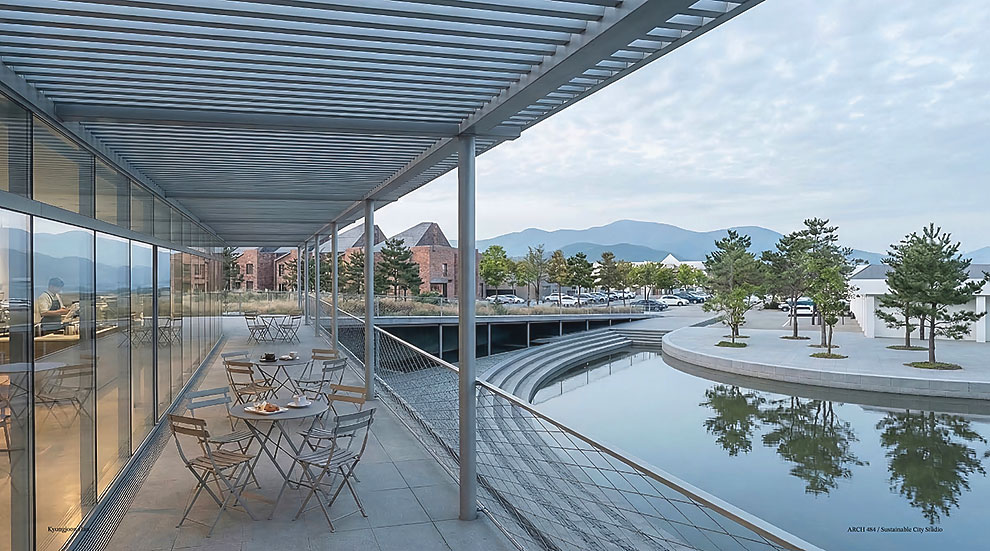
Finally, many renderings show how students grappled with the Tualatin downtown’s rare location within and around floodplains. Some designs elevate the main neighborhood promenades and activity centers to a second level and place parking within the structures below.
The voluminous materials stemming from each presentation grew out of seeds of community feedback that the city collected to envision and influence the future of downtown Tualatin. Next, the student materials will be returned to a downtown community advisory committee on April 1 to begin helping inform the development of an urban design plan and design standards.
At the presentation session, Tualatin Mayor Frank Bubenik, Council President Valerie Pratt and other key staff members marveled over the sheer mass of concepts, notions and details they had seen and heard.
“I don’t know how we’re going to digest all this,” said Bubenik, smiling. “There’s a lot to process here.”
The mayor pointed out that the students’ urban visions bore extra value because they reflect projections of a livable city core conceived by some of the very folks, would-be young professionals, most likely to be open to living in downtown Tualatin.
Sure enough, some students said they tried to imagine how the district would need to evolve to entice them either to live or visit there. “I kind of treated myself as a client: What would make me come to Tualatin?” student presenter Alex Schulte said.
Sid Sin, the City of Tualatin’s urban renewal and economic development manager, initiated the UO collaboration based on an idea he had long entertained but never found the right time or place to try. Sin attended the University of Oregon in Eugene, where he earned an undergraduate degree in architecture and a master’s degree in urban and regional planning, completing the latter in 1996. In that light, it took him 30 years to test out his idea.
“I had to find the right project,” Sin said. “I felt like this was it.”
Sin said the city intends to use the symposium results in a “visual-preference survey,” enabling viewers to hone their thoughts in response to the question of how Tualatin downtown should look. Considering that question, he said, many might say, “I don’t know, but I’ll know it when I see it.” For them, the presentations will offer a visual menu of options, Sin suggested.
For viewers, the design materials might help them recognize the community identity that makes sense for the district, Guivernau said. For the class, he said, “It’s really a luxury for students to be able to work on a real project.”
Students studied four sites. The city of Tualatin has designated one, largely owned by the city along Southwest Boones Ferry Road, as a “catalyst project” because it is identified as one whose development could add early momentum to downtown’s redevelopment.
Like that one, two others were also sites with potential to support uses of mixing housing and retail. Another site was treated as a “connector” to interlink the district with the new river-access park.
Many students demonstrated rigorous discipline in their studies. Others also admitted to enjoying serendipitous inspiration.
Schulte said her concept for turret-like light towers came to her in a dream, conceding that at least some of her work “kind of bubbled up from the ether.” Her presentation also referenced an image of a commercial beehive as inspiration for the layered construction of her concept.
After each presentation, a panel of several professional architects, convened by Guivernau, supplied students with constructive questions and criticisms.
To take a look at the ideas of University or Oregon architecture students, go to tinyurl.com/adsrenderings