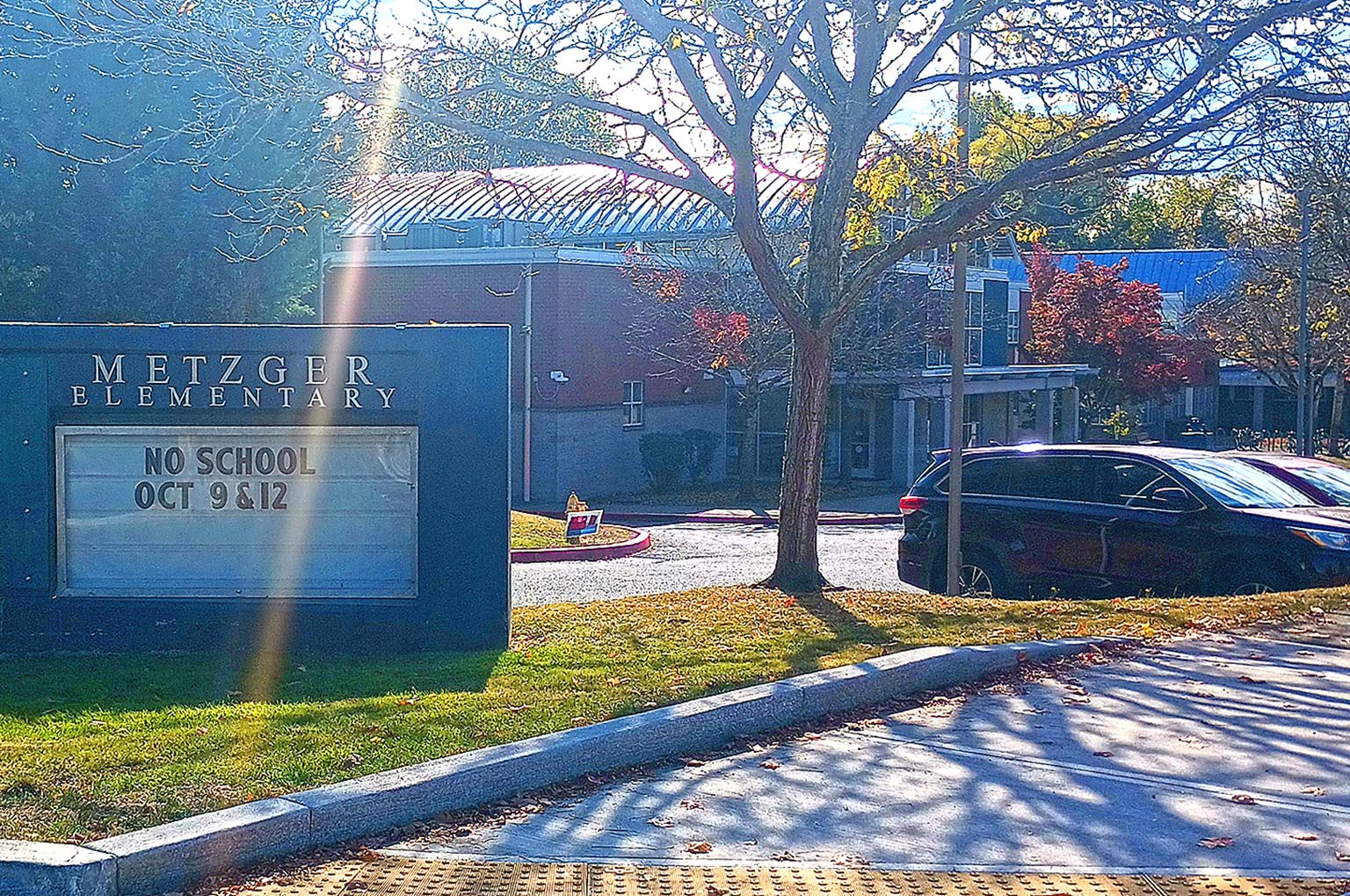

The Tigard-Tualatin School District continues community engagement efforts as it develops a plan to expand its Spanish-English Two-Way Immersion (TWI) program, transitioning Bridgeport and Metzger elementary schools into schoolwide dual-language campuses beginning in the 2027-28 school year.

Superintendent Iton Udosenata acknowledged that such changes are challenging for affected families, students and staff.
“This was not a decision that we took lightly,” Udosenata said. “Ultimately, what we hope to find — and this probably doesn’t help the sting of those enduring that change — is a better student experience.”
Currently, TWI operates at both schools alongside English-only instruction in what the district calls a “two-strand” model. Deputy Superintendent Jeremiah Patterson said this “school within a school” model only allows students from within those schools’ boundaries to attend, and exacerbates other existing inequities.
Although staff works to build connections, intrinsic division complicates collaboration. The English-only strand has two to four times as many student behavior plans, more students with special needs and greater student mobility.

Because students generally cannot enter TWI after kindergarten unless they have a Spanish-speaking or bilingual background, most students moving into or out of the schools are in the English-only strand, creating classroom disruptions and additional demands.
Under the proposal, both schools would introduce kindergarten TWI classes in 2027-28, while kindergarten and first-graders from English-language programs move to other schools. By 2029-30, English-only classes would be phased out, with TWI expanding one grade at a time over the following three years. The schools’ attendance boundaries would effectively “dissolve,” allowing enrollment district-wide.
Parents question single-track approach
Many parents worry the plan will disrupt friendships and educational continuity by requiring their children to travel farther to school. They see little value in pursuing a single-track immersion model when many other Portland-area districts operate dual-track programs.

“The main reason for the change has been that the district is having trouble maintaining TWI as a two-track program,” said one Metzger parent who requested anonymity. “The program they introduced, they can’t administer; now everyone besides them has to take a hit for it.”
Under the proposal, Metzger students outside the immersion program would move to Charles F. Tigard Elementary. Bridgeport’s English-only students would attend either Tualatin or Byrom elementary schools, depending on their addresses.
The transition would also require staffing changes, with three classroom teachers per year moving from English-only assignments into the immersion program. Transfers would follow procedures outlined in employee contracts.
Under the new enrollment model, Spanish-speaking and bilingual students would make up at least half of available seats. Children attending participating preschool programs and siblings of current immersion students would receive priority consideration. Remaining seats would prioritize heritage speakers, with district students receiving preference over outside applicants if a lottery is needed. The district anticipates adding three classes annually.
Patterson said consolidating both immersion programs at one larger school was considered but rejected because it could require Spanish-speaking families to leave their neighborhoods to participate.
In the Portland area, both Beaverton’s Barnes Elementary and Canby’s Cecile Trost Elementary Schooly operate schoolwide Spanish-English immersion. The Portland School District’s Richmond Elementary School operates as a Japanese-English single-strand immersion program. Several school districts have public charter schools that are entirely single-strand. All operate without boundary borders.
Expansion could increase demand
The district believes expanding TWI could increase demand from both within and outside the district. During an Oct. 12 presentation, Patterson said there has always been a “wait list” for the program, which launched in 2012. The district has since clarified that the term described ongoing demand, rather than an actual roster of applicants.
District spokesperson Jordan Mills said TTSD turns away many applicants each year and that the district has five Spanish-only preschools. Most of those students previously lacked TWI access unless they lived within the Metzger or Bridgeport boundaries.
“Transitioning into TWI is a natural progression for these students, and this new model will make that possible,” Mills said.
The proposal also includes a robust marketing campaign and expanded transportation options to recruit students from beyond the schools’ immediate neighborhoods.
“We have not yet really allowed a mechanism to draw Spanish-speaking families from around the district,” Patterson said. “All of those efforts are embedded in this plan to allow more access and be more inclusive of our families who desire this program.”
Costs and transportation
The expansion would add transportation costs.
TTSD estimates it will need two to four additional buses annually, at an approximate cost of $30,000 per bus after reimbursement. Eliminating duplicate staffing associated with operating two programs in the same buildings could save at least $240,000, potentially resulting in a surplus of $120,000 to $180,000. Patterson said financial gain was not a factor in the decision.
Community input shapes revisions
Feedback from families has prompted several proposed adjustments. Following meetings at Bridgeport and Metzger, the district proposed slowing Metzger’s transition by one year, allowing current second graders and older students in the English-only strand to finish at the school.
Kindergarten and first-grade students in the English-only programs at both schools also may transfer into TWI to remain at their current schools.
The district is also developing a neighborhood preference rule that would prioritize future TWI enrollment for students living closest to Bridgeport and Metzger.
School board member Jill Zurschmeide said expanding TWI could help shape the district’s future, while acknowledging the impact on neighborhood schools.
“It’s a wonderful problem to have; that now we have enough students and enough interest in the program to make it an entire schoolwide program,” she said. “There is, however, at the same time, a certain amount of sorrow at the loss of kids going to their community school.”
For more information about the TWI programming in TTSD, visit ttsdschools.org/parents/two-way-immersion.