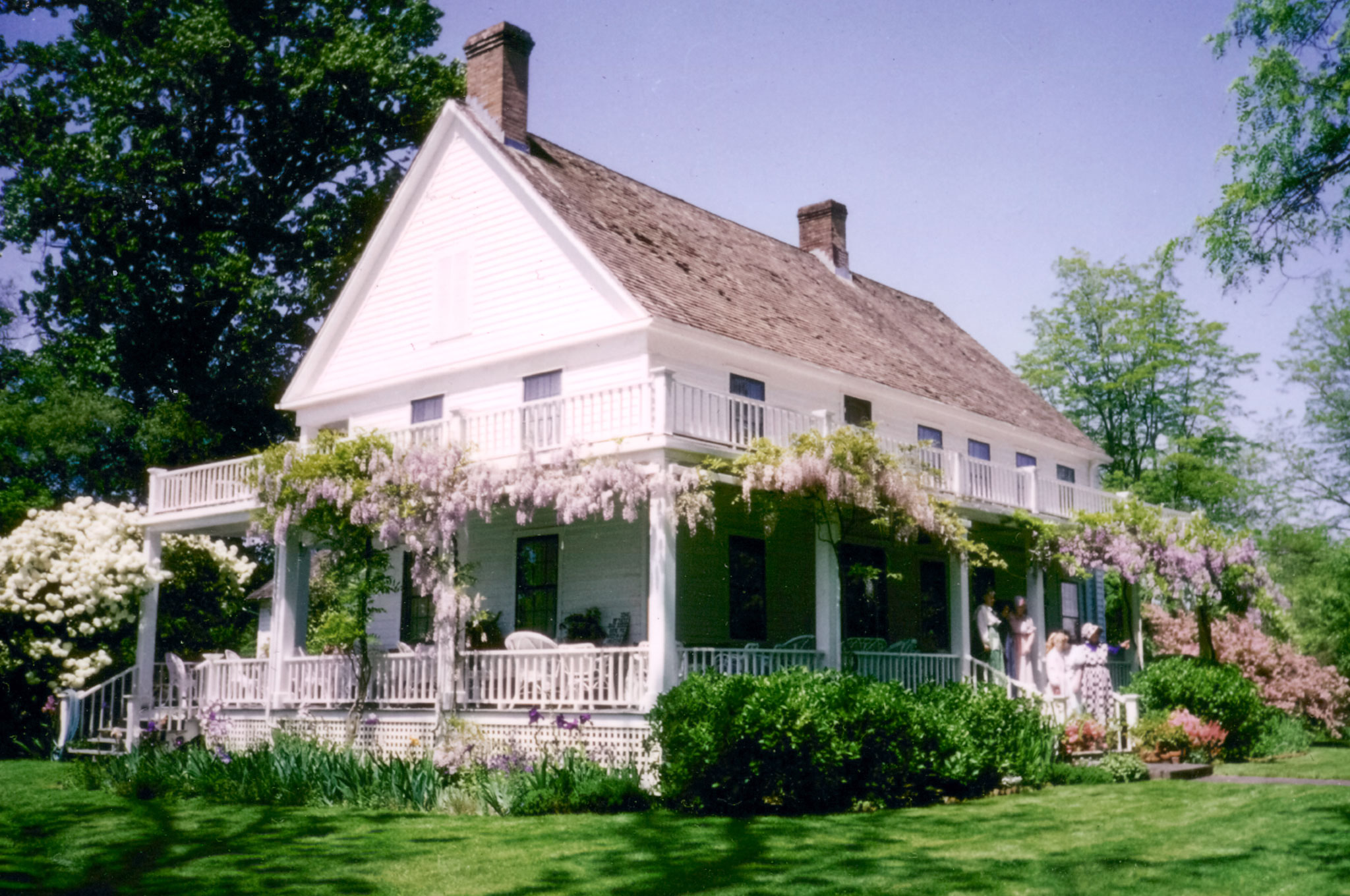

Almost hidden from view behind the railroad tracks and a row of trees, sits a stately Southern Colonial home along Boones Ferry Road, built by John and Maria Sweek. The Sweeks, like other Oregon Trail pioneers of 1853, lived in a log cabin for the first few years. Then in 1858 they began erecting the building we now call Sweek House. They called their place “Willowbrook,” naming it for the willows that grew along the creek
her family.
Maria was a bride in 1852 when she and her husband John joined one of the largest Oregon Trail wagon trains. Many years later, Maria wrote about life on the trail. Maria Sweek’s Diary, as it is called, was included in the Tualatin Historical Society booklet entitled Life in a New Untamed Land.*
John Sweek freighted goods to the miners in Idaho. “He was there six years,” wrote Maria,“and I had the management of building this house and the barn, with four children to take care of.”
Maria had two more children after John returned.
Maria was alone with her children during the times John was away working and she was remembered as a brave and resourceful woman. Maria invited local folks to sleep-over dances and hired local musicians to play. She charged $1 each, so the story goes, and earned enough money to build the house to resemble the fine homes she remembered from the east.
I got a call a few years ago from a Sherwood antiques dealer who told me she had found an 1870 Christmas party invitation that John Sweek sent out to his friends. I purchased the invitation, and donated it to Althea. Later I found that another Sherwood family has one also. I can only imagine how grand that party must have seemed to the settlers.
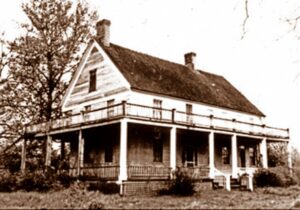
John Sweek was ambitious, and sold land and timber for ties to the new railroad that was coming through. Like his friend over west, James Smock, he laid out a town site around the depot and named the new town “Tualatin.” Smock named his town “Smockville.” (Later changed to Sherwood.)
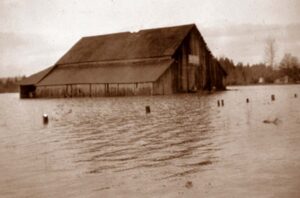
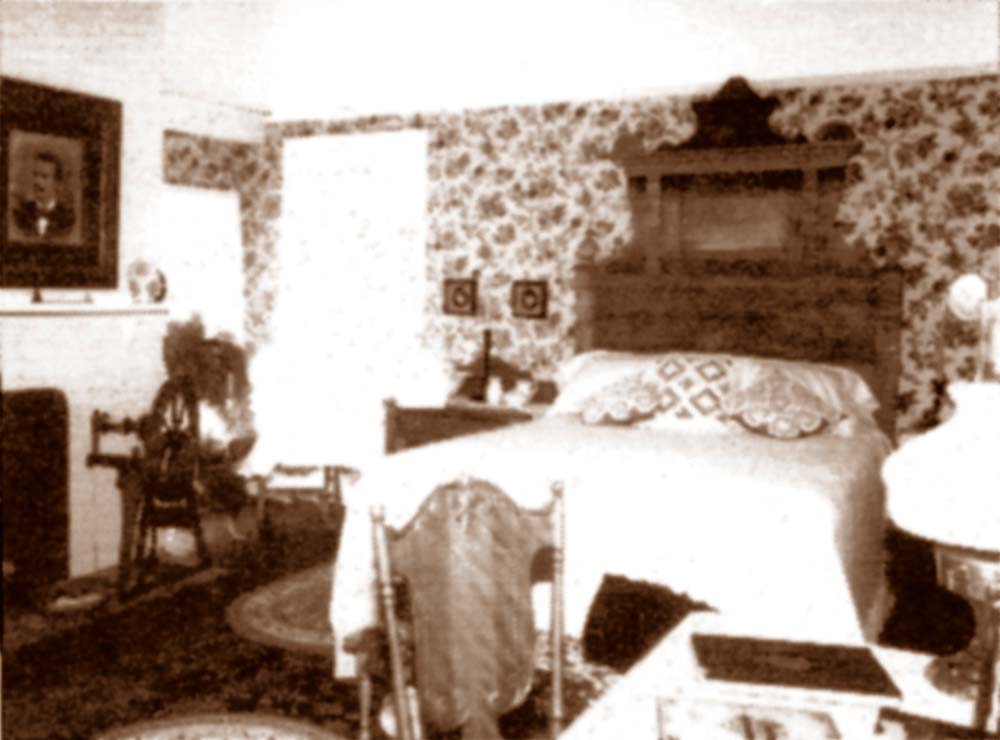
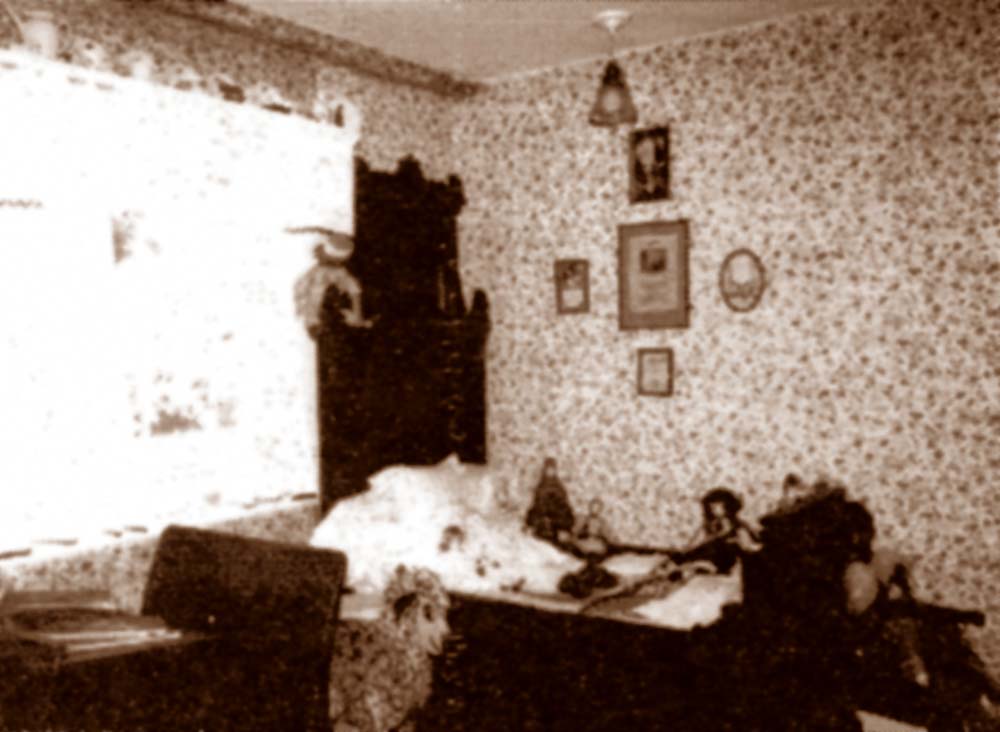
In the flood of 1890 John drove his cattle to higher ground, got wet, cold, and contacted a fever, He died and is buried in Riverview Cemetery. Maria lived on until 1916, and was buried beside her husband. Lillian Harding, daughter, inherited the house and when she passed away in 1953, it sat vacant until purchased by Althea Pratt. Althea has worked tirelessly to renovate the house as closely as possible to its original style. Some of the Sweek furniture remained which Althea refinished A bedroom suite, dismantled and scattered about the farm has been restored and returned to its place upstairs.
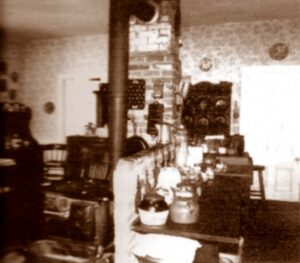
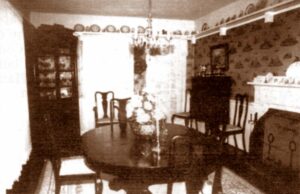
Sweek House has ten spacious rooms: a large living room, dining room, kitchen, pantry and five bedrooms upstairs. Bathrooms have been added. Five fireplaces heated the house in the old days.
In 1959, Oregon’s Centennial year, Althea opened the house to the public, and after the Crawfish Festival parade, dozens of people trouped through, with Althea leading the way explaining each room, adding tidbits of family history. The house was added to the National Registry of Historic Places in 1959.
Later Althea married Jack Broome, well known retired Portland architect, and he helped renovate and restore the building to its former glory. He enclosed a little shed in the back for his library. Jack said he found the foundations of a cooling chamber in the creek. It would have been used to keep milk, meat and other perishables fresh. Many stories could be told of the Sweek place, especially about the Chinese man who came to work on the railroad and stayed on with the Sweeks. “Old Hing,” was his name.
Life in an Untamed Land
includes, besides Maria Sweek’s diary, a diary by Henry Hays, pioneer of 1850, a letter written back home by William Robbins in 1853, and Nancy Robbins Ball’s terrifying story of floating down the Columbia when she was a child.
The booklet sells for $10 and can be purchased at the Tualatin Heritage Center, 10 am to 2pm weekdays.