
Helping or Hurting? Tualatin farmers differ in their opinions on a House bill that lifts restrictions on farm stores.
House Bill 4153, also known as the “farm store bill,” was introduced at the latest State Legislative Session in February. The bill instantly sparked controversy by rewriting many of the rules governing what farmers could commodify, as well as loosening restrictions on “agri-tourism.”
HB 4153 defines agri-tourism as “an activity that is conducted by a farm operation to promote the farm operation, visitors to a farm store and the sale of farm store products to the public and that may also generate commercial, entertainment or educational value.”
Organizations like the Oregon Farm Bureau wrote to the Senate in support of the bill, reasoning that “OFB supports HB 4153 because it strikes a balance between helping farmers stay profitable and protecting our state’s agricultural lands.”
Countless other farm entities testified against the bill, arguing that it would “create additional bureaucracy and confusion for small farms” as well as setting a “dangerous precedent.”
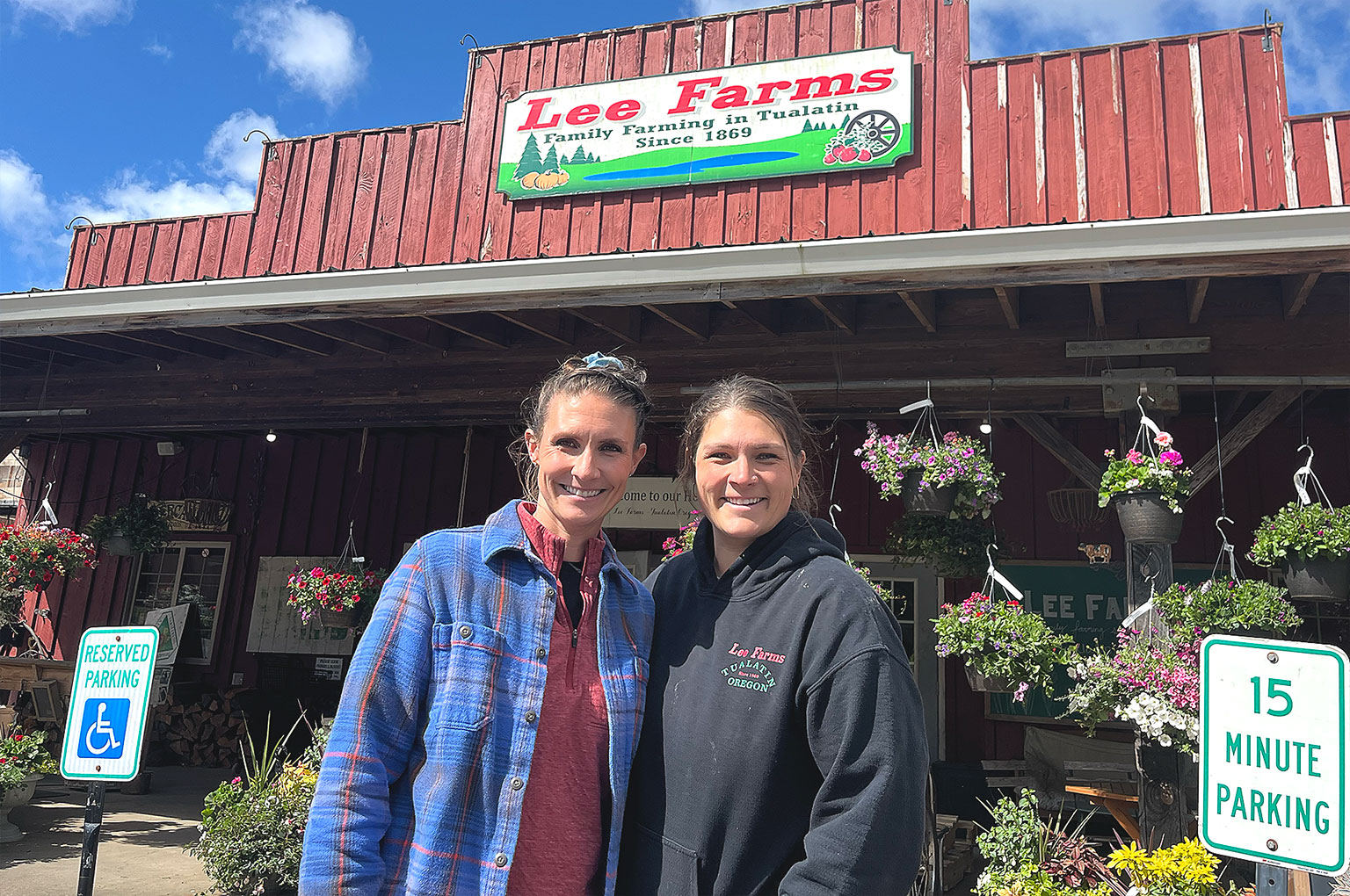
Lee Farms in Tualatin was a vocal proponent of passing the bill during legislative hearings and told Tualatin Life that, without an update to the state agritourism allotment and farm store regulations, their business model would not be sustainable.
“There’s no way that that’s sustainable,” said Teagan Lee Milera, sixth-generation Lee Family Farmer. “There’s no way we could actually keep the farm around and keep it as an actual farm.”
Milera said that strict Washington County permitting requirements wouldn’t allow most of the services and experiences already offered at Lee Farms.
“We were told by Washington County that to obtain a farm stand permit and to operate under that, we could offer a ‘tote of corn’ on the side of the road,” Milera said. “That would essentially be what we could do with a farm stand permit.”
HB 4153 was signed by Oregon Governor Tina Kotek on April 7, and while the bill doesn’t go into effect until January of 2027, Milera said Lee Farms is preparing for impact by rearranging their farm store to meet the 10,000 square foot requirement as well as the 25% limitation on outsourced merchandise included in the bill.
“I think that’s totally fair and reasonable,” Milera said. “Some of these people who are opposed to the bill are saying it allows anybody to put up their 24-Hour Quickie Mart. Under this bill and the way that it’s written, there’s no way that we could do that.”
The guidelines for farm stores featured in the new bill regulate where the store is located, how many employees can work there, the store’s exact square footage, and the store’s gross income relative to the farm.
Oregon Senator Robert Wagner told Tualatin Life at an event in March that he thought the bill had landed in “a good place” after multiple amendments had been added during the legislative session.
“I think there’s some really good sideboards around where they landed on people being able to put farm stores out there,” Wagner said. “I feel like they landed in a good place that provides balance.”
While Lee Farms and others applauded the bill’s impacts, some farmers in the Tualatin area were a bit more skeptical of its repercussions for the farming community, especially small farms.
“I think it will impact us quite a bit,” Jeff Jensen of Jensen Mini Farms told Tualatin Life. “There’s always been a mechanism in Oregon to have a farm stand, but this made it super simple to turn anything into a farm stand for not necessarily agriculturally based operations.”
Jensen and his wife, Lory, have owned and operated Jensen Farms on Hazelbrook Road since 2017. Jensen said that he was not in favor of HB 4153 and was concerned that the impacts could make it harder for small farms to get started in Tualatin.
“Oregon is one of the highest-priced agricultural lands in the United States,” Jensen said. “It is a large burden to enter for a new and beginning farmer. In my opinion, what this is going to end up doing is make it even harder for that new and beginning farmer to start that home-based operation on 10 to 20 acres of land.”
According to the United States Department of Agriculture 2022 Census Data, farmland in Washington County costs $22,445 per acre on average, the third-most expensive in the state.
Jensen said that because smaller acreages of farmland could now be converted into properties that emphasize experience over selling products (or what some farmers refer to as “Disney Land operations”), the competition could be even tighter for up-and-coming farmers who could not offer the same amenities and would raise prices on farmland.
“One of the many things that keeps coming up is the Disneyland operations,” Jensen said, referencing a recent discussion he’d had with Friends of Family Farmers. “They’re not working farms hosting events, they’re pieces of land hosting events to get people to come to them.”
The bill includes clearly defined conditions for agritourism events, requiring that an event “does not exceed 500 people” in attendance and stating that no more than 250 motor vehicles should be allowed on a property at a given time, and placing final authority in the hands of county governments.
Lee Farms, while not meeting the criteria of a Disneyland operation, does offer an array of seasonal events, such as its Summer Camp and Pumpkin Patch Festival, and Milera said that the bill would protect areas from the negative side effects of farm stores, events and experiences by regulating noise pollution and increasing patronage.
“That’s why this bill is important,” Milera said. “The county has every right to come out here and be like, ‘No,’ and shut us down. Which again, we’re all for that.”