
At their meeting on Aug. 19, the Tualatin Planning Commission voted to recommend a newly amended plan for food cart pods to City Council. In a 5-1 vote, the commission agreed to send the plan to city council after deliberating over requirements and tacking on contingencies for smaller food cart operations.
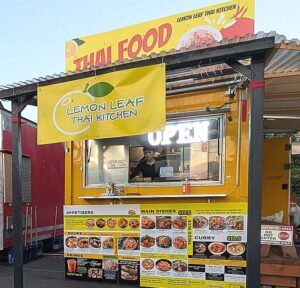
Solitary food carts have been permitted in Tualatin since 2019, but Tualatin planning staff have recently worked with city councilors to define what food cart clusters would look like in the city.
“The community shared overwhelming interest in a food cart pod downtown, near our parks,” said Tualatin Senior Planner Erin Engman at the Aug. 19 meeting.
Single food carts are currently allowed to operate in various locations around Tualatin, but the ordinance passed in 2017 requires that “only one mobile food unit is allowed to be present at a site at any one time.”
Engman told planning commissioners that the new plan would allow multiple food carts to apply for permits for a single site and the city would review their applications using a tiered system based on operation size.
The new plan would also expand the zones where food cart pods could legally operate, allowing pods to set up in new locations like downtown Tualatin and Bridgeport, but not in zoning districts that are currently legal, like general manufacturing.
Single food carts would also lose some of their access under the new guidelines, which removes their right to operate in commercial office zones around downtown and along Tualatin-Sherwood Road.
While supportive of food cart pod expansion, some commissioners and public commenters questioned the design/circulation standards, which required pods to build restrooms, build shade structures, provide minimum bike parking and adhere to storage restrictions.
Former Tualatin City Councilor Robert Kellogg attended the meeting and requested that commissioners pause their process and reassess requirements featured in the plan.
“I’m 100% in support of good regulations for food carts,” Kellogg said. “The idea that two carts equals a pod and requires a centralized grease trap and needs a minimum 1000 foot covered structure and a permanently plumbed bathroom…What’s the chances that one of these Taj Mahal food carts develops in Tualatin? Probably not good.”
Some commissioners shared similar concerns, citing potentially exorbitant costs of installing plumbing at permanent pod sites.
“If we want to see food cart pods actually materialize here in Tualatin, I think I agree that having some sort of tiered optionality doesn’t require all of that,” commissioner Zach Wimer said.
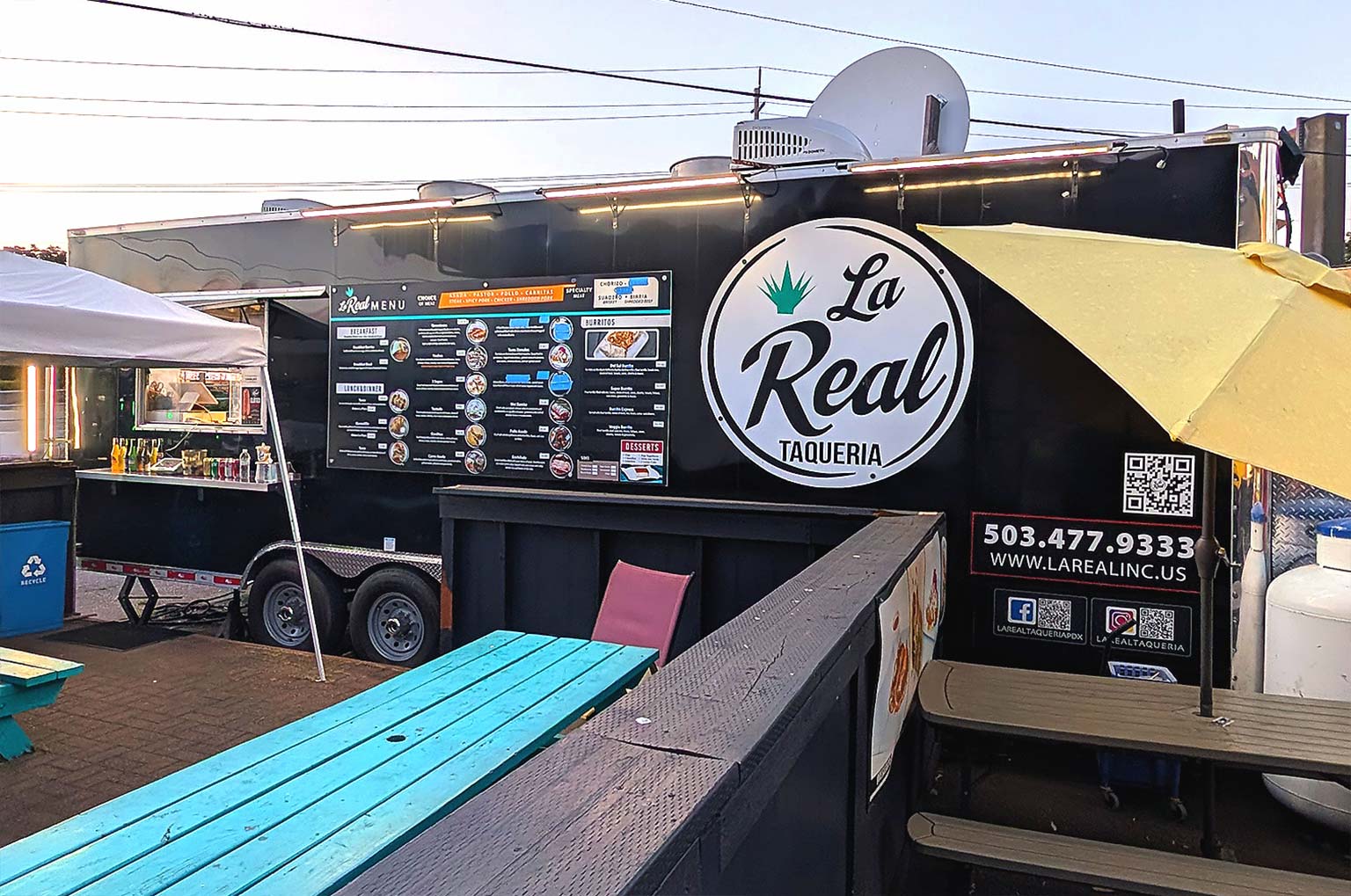
Erick Sanchez, owner of the Tigard Mexican Restaurant and food cart, La Real Taqueria, told Tualatin Life that establishing parameters for pods in Tualatin could be impactful for his business model.
“We actually are looking for a new spot for our Tigard location, since our restaurant is less than a mile away,” Sanchez said. “We’re at the point where it’s more convenient for people to go to the restaurant instead of the cart because the amenities at the restaurant are a lot better than that spot.”
The La Real food cart is currently located on Pacific Highway in Tigard and neighbors two other carts in the parking lot of Hotpot Palace and BBQ.
Sanchez said that, from his perspective, having an established location with amenities like bathrooms and tables is hugely beneficial for food carts, but also said that requiring food carts to provide their own amenities could reinforce their commitment to the area, which, in turn, benefits neighboring carts.
“I think it’s better for food carts to provide their own stuff; they’re more committed, so they’re not switching out trucks every six months or so,” Sanchez said. “Where I am in Tigard, at that location, basically everyone is on their own…we’re basically building the pod, but we’re not in a pod, I would say.”
At the Aug. 19 meeting, commissioners voted to pass their plan along to city councilors, with their newly added caveats for smaller pods.
“I think there is a value in at least getting something on the books,” Planning Commission Chair Janelle Thompson argued. “We could also put in there contingencies telling city council, look, we feel like there could be some demand for this smaller section, recognizing that it would need to have porta-potties or some of those services provided.”
Commissioners largely agreed with Thompson’s take and reworked the recommendation to add a new tier for food cart pods with two to four carts, requiring them to provide only portable toilets for patrons.
“I think it’s worth pushing back to council to see what their appetite would be,” Lindsey said about the proposal. “We’re just trying to open up a smaller ecological niche where things can thrive.”
The commission approved the amended plan, which included parameters for smaller cart configurations, in a 5-1 vote. Commissioner Allan Parachini voted no.
The plan, along with the commission’s new suggestions, will come before Tualatin City Councilors at their meeting on Sept. 28.