

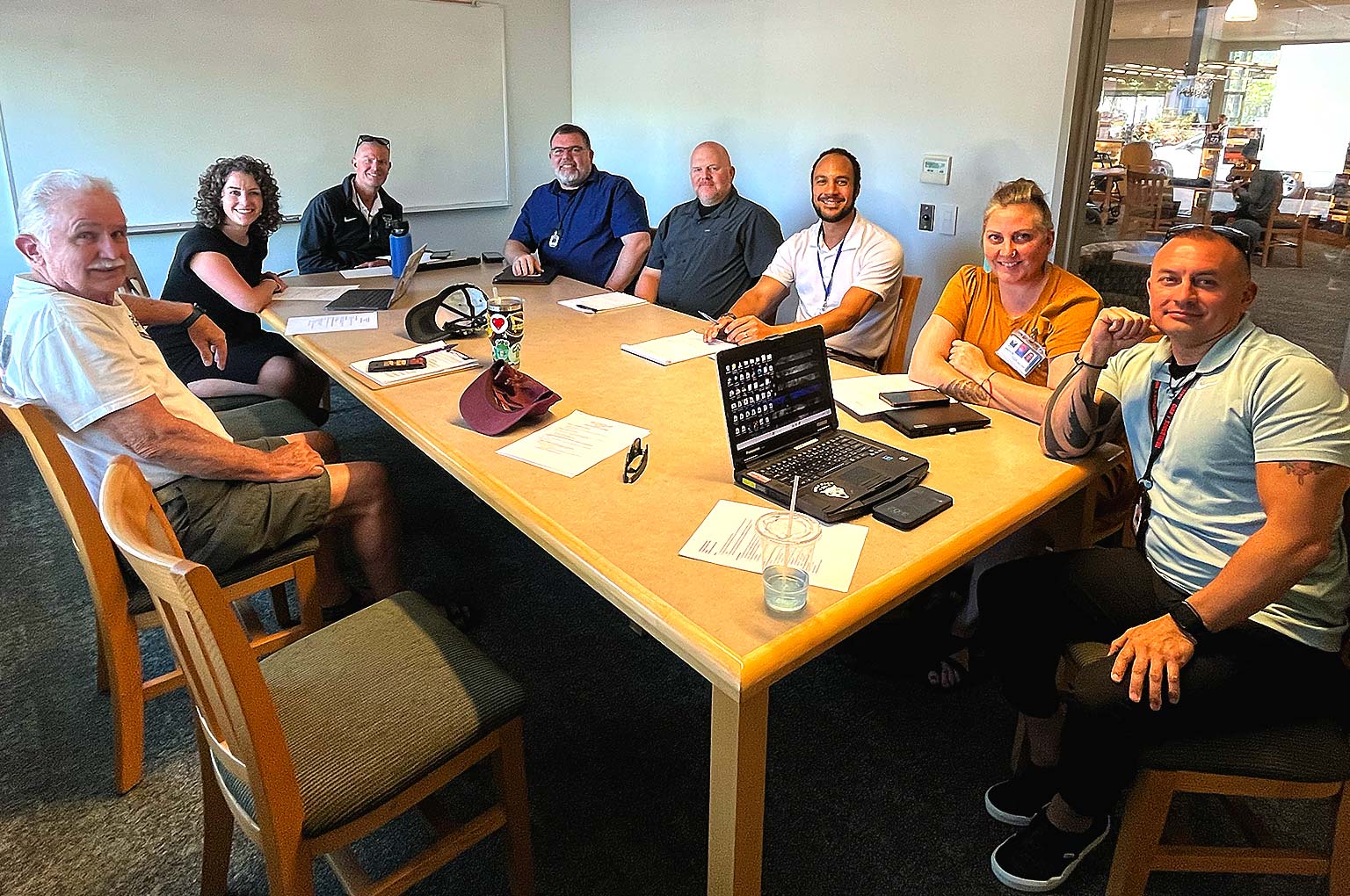
The Tualatin Coalition for E-Safety wants to start teaching Tualatin middle schoolers how to stay safe on electric bikes and scooters.
After multiple members of the Byrom Neighborhood Community Involvement Association (CIO) expressed concern about the use of “powered micromobility devices” in Tualatin, a coalition was formed to reduce accident rates and educate the community.
The group is made up of about 10 people from Tualatin city government and the Byrom CIO, as well as Tualatin Police Officers, staff from the Tigard Tualatin School District, local business representatives and medical professionals from Randall Children’s Hospital. They held their first meeting in May.
“It’s an interesting space where no one person is in charge,” said Tualatin Parks and Advisory Committee Member and coalition facilitator Beth Dittman. “The coalition meetings are really about all these different stakeholders from different organizations and groups coming together.”
Coalition members cited two primary causes for their call to action within the community: a recently passed transportation bill that will allow 14-year-olds to operate e-bikes next January and a steep rise in e-bike- and e-scooter-related injuries.
“Principally educating the youngsters and the parents and quite honestly anybody that’s buying these and riding them should be the first priority,” said Danny O’Neal, who helped launch the group. “We want to get the word out to prevent any incidents.”
Recent data from the Oregon Health Authority (OHA) show a sharp rise in micromobility mishaps. According to the OHA, in 2021, Oregon hospitals collectively reported 211 injuries specifically from e-scooters. In 2025 (Jan – Sept), that number was 509.
“The last recorded available information for 2025 was 639. That’s huge,” O’Neal said.
Paired with the uptick in electric transportation accidents is the coalition’s concern over a recently passed Oregon Transportation Bill that, when enacted in 2027, will lower the age limit for operating Class 1 e-bikes from 16 to 14.
House Bill 4007, which was passed last April, reads, “a person may operate the following without any grant of driving privilege if the person is operating: (a) A Class 1 electric assisted bicycle and is 14 years of age or older.”
Class 1 e-bikes are defined as having a motorized pedal-assist that only assists the rider up to 20 miles per hour.
Dittman came before the Tualatin City Council on July 27, telling them about the group’s intent to jumpstart a week-long education campaign.
“This fall, we will launch a compulsory week-long middle school education campaign featuring assemblies, classroom lessons, hands-on demonstrations, and helmet fitting events,” Dittman told the council.
Dittman explained that the coalition’s education program would consist of a weeklong series of lessons at Hazelbrook Middle School, starting with students who are currently too young to ride e-bikes and e-scooters.
“The idea we came up with, which is a concept familiar to educators, is to teach upstream,” Dittman said. “We educate a sixth grader who can’t legally ride an e-bike about the rules and the safety skills so that when they become legal age they have those skills.”
The coalition is basing much of its educational efforts on other cities and counties that have implemented similar strategies. Dittman cited Bend, Oregon and Marin County, California, as primary influences.
Marin County, California notably reexamined its e-bike regulations after a 2023 e-bike crash left a 15-year-old girl with a serious head injury. The county now requires an individual to be 16 years old to ride a Class 2 e-bike (a bicycle with throttle assist and a motor). Oregon also currently requires riders to be 16 to operate a Class 2 e-bike.
“As it is often with new technologies, the technology took off, and supplemental education or support for teaching people how to use it safely and well wasn’t necessarily a part of that infrastructure,” Dittman said. “What can we do to educate the community first before we actually do something different?”
Dittman explained that she didn’t want a ban on electric mobility in Tualatin and that one of her key goals was to understand the benefits of the technology.
“A goal that I’ve personally brought to the table is to make sure we’re working from a paradigm or framework that understands that e-mobility or micro-mobility is here to stay and it actually has many benefits and is good,” Dittman said.
The group is planning to start a week-long educational series for the students of Hazelbrook Middle School, running from Sept. 28 to Oct. 2.
The coalition has also begun searching for grant funding that they plan to use to further advance their teaching strategies. O’Neal said that outside funding would “immensely” help the group continue to engage with the community.
“We’re playing catch-up because these things hit the market so quickly and are evolving so fast that anything we can do now is playing catch-up,” O’Neal said. “My whole thing when I started looking at this was we’re being reactive; we need to be active in preventing it.”
The coalition is holding its first community listening session on Oct. 27 at 6 p.m. at Hazelbrook Middle School, where attendees can voice their opinions on electric mobility in Tualatin.