

A relatively new energy source, currently powering Tualatin’s City Services Building, will produce 270,000 kilowatt-hours of electricity and save the city $26,000 a year.

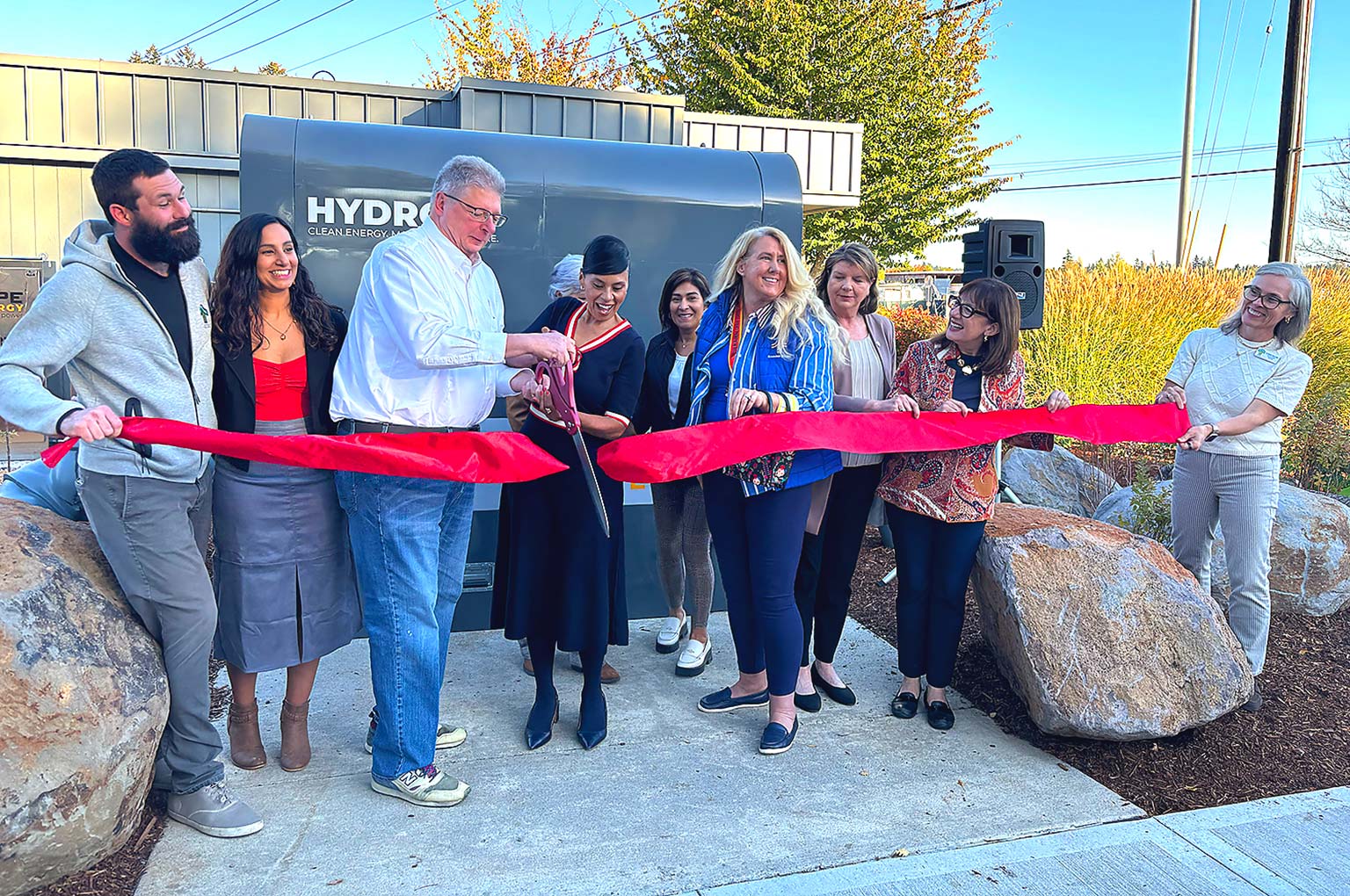
The city officially celebrated its InPipe Energy hydro-turbine – which was installed last April – on Oct. 12 with a ribbon-cutting.
The commencement ceremony was held at the city services building and attended by local figures like Tualatin Mayor Frank Bubenik as well as Oregon State supporters like Congresswoman Andrea Salinas and Meredith Armstrong from Portland General Electric.
“Our new micro-hydro system captures the excess energy in that flow and turns it into clean renewable electricity,” Bubenik said at the event. “More than 270,000 kilowatt hours a year. That’s enough to offset the power usage of this campus behind me.”
The city partnered with the machine’s manufacturer, Portland-based InPipe Energy, in 2023 and spent $920,000 to acquire the generator and renovate the area around Herman Road for installation.
According to the city, “grants, incentives and anticipated tax credits covered more than 85% of the project’s $920,000 total cost.”
Tualatin Deputy Public Works Director Nic Westendorf told Tualatin Life that the generator’s central location was attractive to city staff because it efficiently provides power to the adjacent campus.
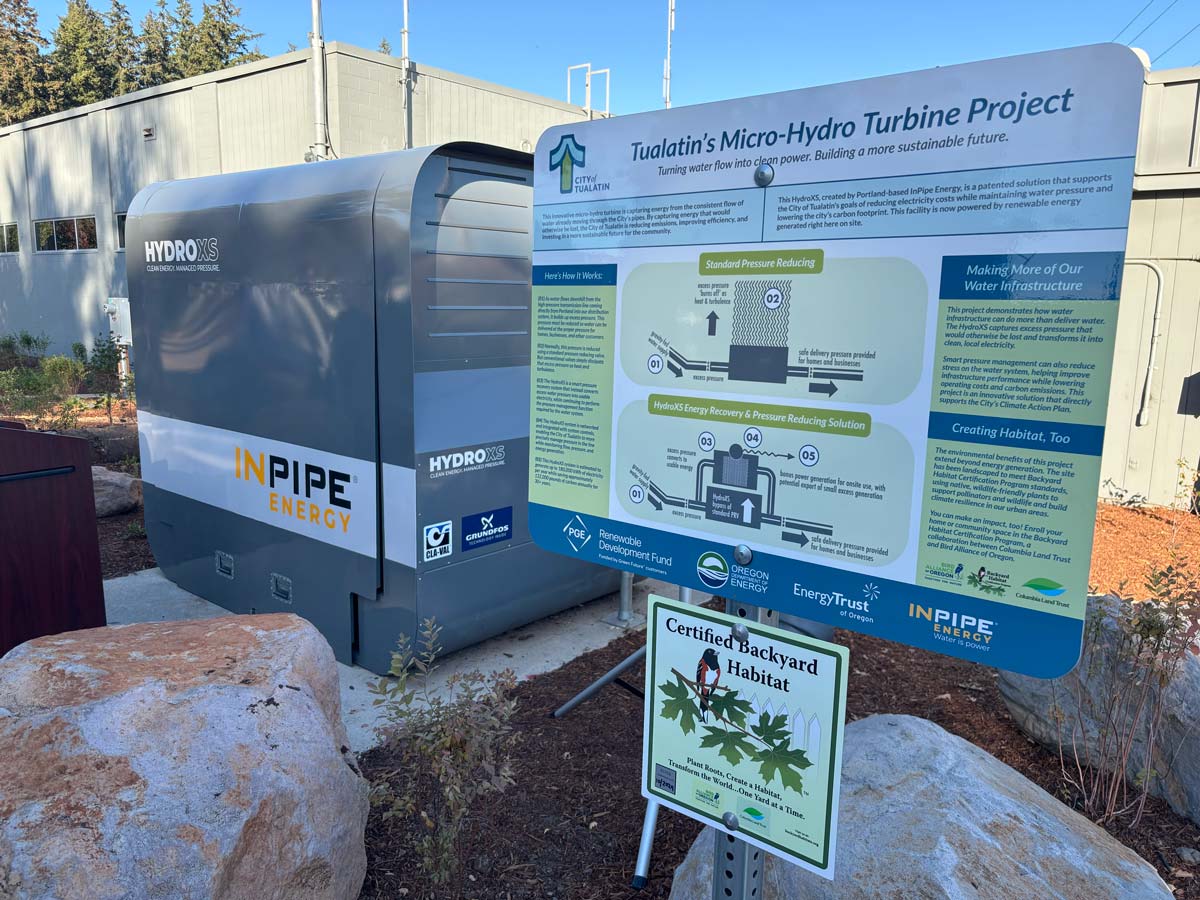
The turbine, which connects directly to Tualatin’s central water line, operates by converting excess water pressure into renewable energy sent to a nearby electrical grid.
“InPipe Energy developed a system that’s like a valve. It manages flow and pressure very precisely,” InPipe Energy Founder and CEO Gregg Semler told Tualatin Life. “But instead of wasting energy, it uses a turbine to harvest that flow and pressure…Now what happens is, water flows through Tualatin, and instead of using friction, it uses the turbine that generates electricity that goes to the power panel that offsets this facility.”
Semler said InPipe currently had five more turbines in construction and “just got a contract from New York City.”
Ceremony attendees met at the site surrounding the turbine, which recently earned a Backyard Habitat certification after being revegetated by local high school students leading up to the turbine’s activation.
“One area people seek relief is in their energy bills,” said Salinas at the event. “The City of Tualatin and Energy Trust of Oregon have found a creative way to meet our growing energy needs, and you’ve done it in a way that generates clean, affordable electricity, using infrastructure that is already in place.”
Event speakers highlighted Tualatin’s partnership with nonprofit Energy Trust, which donated $270,000 in cash incentives to the project. Energy Trust Director of Energy Programs Tracy Scott was present at the event and thanked the city for its partnership.
“I just want to acknowledge that the partnerships really were what made this happen,” Westendorf said at the event. “While it is a huge milestone in our climate action plan and our emissions reduction work here at the city, the thing that I am most excited about is the knowledge and relationships that we built through this project.”
Westendorf and other speakers noted that energy from the turbine would help Tualatin achieve its goal of net-zero carbon emissions by 2050. Another benefit mentioned was the turbine potentially acting as a reliable back-up resource for city power outages.
Westendorf said the city had “already been working” with the Oregon Department of Energy to secure two electric vehicles that would be charged with excess turbine energy, as well as installing solar at Tualatin’s “city offices and library.”