
In 1964, Ed Palumbo enlisted in the Marine Corps. He was 17 years old.
Since then, Palumbo served in Vietnam, built a successful career and became a husband and father. Along the way, he developed a passion for writing, earned a college degree and pursued many adventures.
At 80, Palumbo sees life as a gift, shaped by the moments, relationships and opportunities he never could have anticipated as a teenager.
From humble beginnings to big adventure
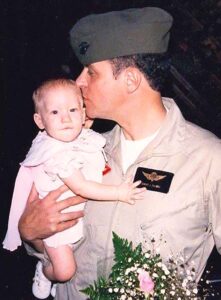
Raised in the Two Bridges neighborhood on Manhattan’s Lower East Side, Palumbo led a “colorful” childhood. He did quite well in school, but his family was poor. Then, as now, the military was an “honorable” way to progress after high school.
The Marines won his services with a promise he would never be bored: “I mentioned to my recruiter that I enjoyed camping [and he said] ‘Oh, we’ll keep you outdoors.’ He was a crafty man.”
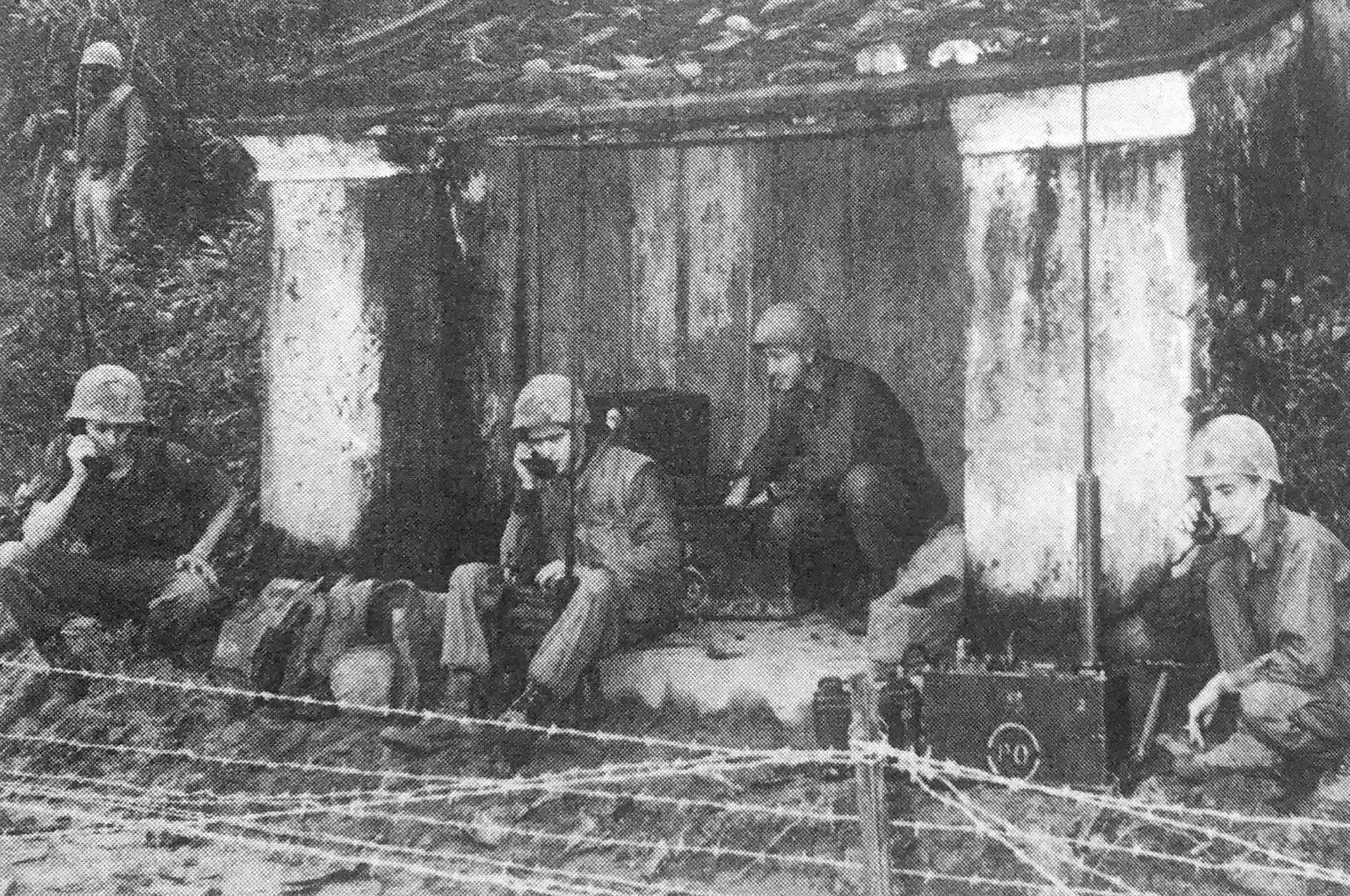
After boot camp, he attended communications training in San Diego. He learned to work in a field message center, operating radios and teletype machines.
In Vietnam, the war was already underway. Rumblings of American involvement grew daily. Still, Palumbo had no real concept of what lay ahead.
“To me at the time, it was all a great adventure.”
Reality strikes
His unit eventually shipped out, stopping at Pearl Harbor and Okinawa before landing at Chu Lai, Vietnam.
Despite some cultural growing pains living and working among the locals, the battalion soon settled in and focused on engineering and communications support.
Whenever he could, Palumbo took on new challenges to avoid being assigned to “grunt work.” He learned unfamiliar equipment on the fly.
“If you’re going to be in an environment like that, you will be a model of versatility,” he said.
Military maneuvers
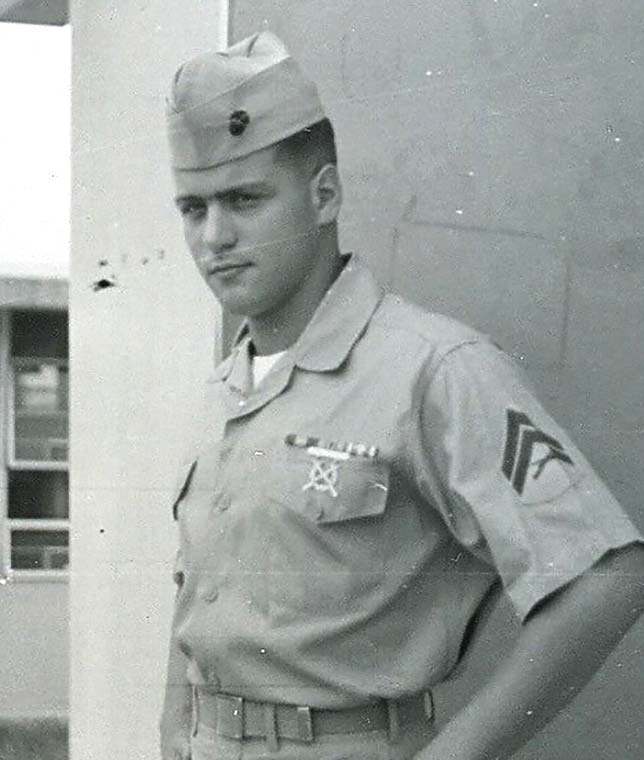
Like many Vietnam veterans, Palumbo doesn’t like to talk too much about combat. Apart from the brutal heat and conditions, the enemy was largely unseen. Instead of organized forces on the battlefield, maneuvers largely consisted of teams wandering through the jungle.
“We were like hunting parties, if you will,” he said. “If we interacted with the opposition, we dealt with it. I got shot at, and I shot back. God, we were green.”
Good leadership was more important than ever. The average age of the Vietnam soldier was 19, compared to 26 in World War II.
“Some (staff NCOs) had experience from Korea. They taught us a lot,” Palumbo says. “Because we were stupid.”
But over time, NCOs’ differing abilities were revealed. Some earned confidence. Others did not.
“We had NCOs who were primarily the backbone of the unit, and we would do anything for them,” he says. “But we had a few who were very disappointing.”
A turning point
One disappointment came the night a young lieutenant decided to cover the battalion’s vehicles with tarps, intending to disguise the number of troops.
“Except when somebody is sitting in a covered vehicle, they have no idea where fire is coming from,” Palumbo says grimly.
There was an ambush, and a good friend, Cpl. Thomas Stifler, was shot in the back. Though Stifler survived and was eventually medically discharged, the incident had a powerful effect. Operations became more serious and meticulous.
Partially paralyzed, Stifler returned to the U.S. He earned a degree in international relations and now lives in the St. Louis area. Decades later, Palumbo still considers him family.
New directions
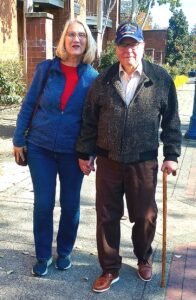
After Vietnam, Palumbo returned to Okinawa, finishing his tour training new recruits. A nine-week hospitalization to treat an infection inspired his next career- medicine.
After returning to the U.S. in 1968, he went into respiratory therapy and later pulmonary diagnostics. He also discovered a talent for technical writing. Building on his work in the military, he found his manuals were more effective than trying to train people verbally. He liked taking complicated information and making it understandable.
“It was a need to write,” he said. “It was a need to express myself.”
Palumbo met his wife, Tammy, while working at a California hospital in 1980.
“I was making some notations in a patient’s chart, and I heard this laugh. Not a ha-ha. Not a polite laugh. It was a genuine laugh,” he recalls. “And I had to look around and see.”
Curious about his parachuting hobby, Tammy wanted to learn more. Palumbo responded in the way that came naturally to him: He wrote her a training manual, then invited her to join him. She made five jumps before deciding she’d had enough.
Their leap into marriage, however, has lasted 44 years and counting. They have two children: daughter Julie, a third-grade teacher, and son Daniel, who is a former police officer and current firearms instructor.
After the 1983 bombing of the Marine barracks in Beirut, Lebanon, Palumbo returned to active reserves, but when Julie was born in 1986, he left the service behind for good.
A life of curiosity
Palumbo’s writing skills eventually led to a long career in quality assurance in the aerospace industry, including writing manuals for many aircraft parts and a missile system used in Desert Storm.
His many other hobbies included rock climbing, scuba diving and riding motorcycles. His fascination with firearms preceded his military career and continues today.
At age 50, he earned a business degree from Biola University in La Mirada, Calif.
Still a Marine
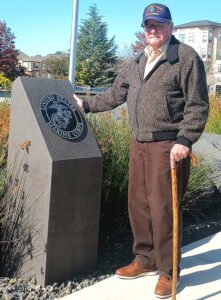
Ed’s was not a carefully plotted journey – more like a series of doors he was willing to open.
He remains engaged with military issues. He writes letters and always votes. He speaks candidly with young people considering military service: The demanding life isn’t for everyone.
Though he will always be a Marine, he considers the Vietnam conflict a mismanaged mess.
“We had given much, but it was a poor economy of resources and a waste of lives…and some of them were close to me,” he says. “I became very critical, very watchful of the government’s decisions after that, and I remain so.”
Service made him sympathetic to military needs and supportive of all branches, regardless of political climate.
The young Marines he served with are old men now, ribbing each other about how they’ve aged, their lives forever entwined by the eternal thread that binds all veterans together.
“I don’t use the word ‘brother’ lightly,” Palumbo says. “At some level, I will die a Marine.”