
Tualatin makes headway on many of its Climate Action Program’s initiatives
“How are we doing? Pretty good,” said Amanda Watson, Tualatin’s Climate Action Program Manager at an April 13 Tualatin City Council work session. “The majority of actions are completed or underway in this two-year plan, which is fantastic.”
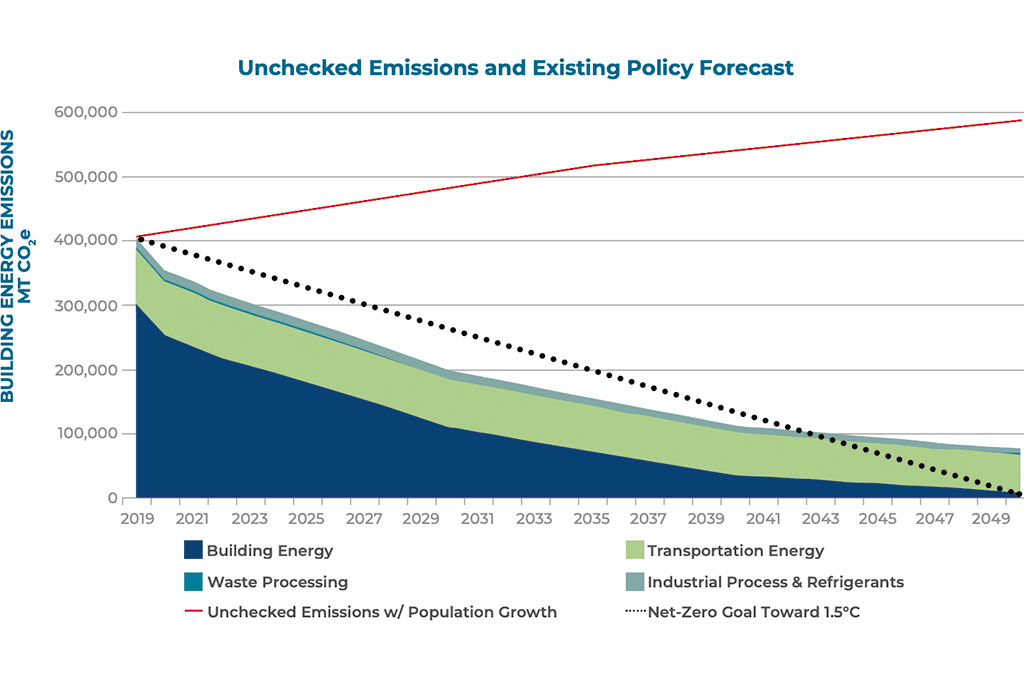
Tualatin’s Climate Action Plan was originally adopted in 2024 and aimed at achieving net-zero carbon emissions for the city by 2050. Since 2024, the city has begun many of the objectives outlined in the plan, with Watson reporting on April 13 that, out of 33 initiatives, 20 action items are in progress, six have been completed, and seven haven’t been started.
Tualatin has already accomplished action items like increasing the city’s solar reliance and amending the city’s Transportation System Plan to incentivise EV “micro-mobility,” and items like establishing a city-wide water conservation program and updating public works construction code to be more sustainable are a few of the goals the city is on its way to accomplishing.
The city’s two-year work plan cycle began in October 2024 and will conclude in June.
“Five of the seven are not started because they would have been funded through the Charging and Fueling Infrastructure (CFI) grant,” Watson said. “It’s been on hold since the Trump Administration paused that program.”
Tualatin’s CFI Grant was for $15 million and was going to support climate action projects like installing additional EV chargers, increasing EV promotion and conducting a pilot program for an electric car-sharing service.
“We expect to eventually get that funding, we just don’t know when,” Watson said. “The grant would have helped us hire a staff person to coordinate this work.”
At the meeting, Tualatin’s City Attorney Kevin McConnell brought up a pending federal court case involving various states and the U.S. Department of Transportation. The lawsuit aims to alleviate the funding drought many municipalities entered into after the Trump Administration canceled CFI funding.
“One of their prayers for relief is to vacate the pause on CFI funding,” McConnell said. “If they are successful, they anticipate that the prayer for relief will cover not only the states that are plaintiffs in the action, but any CFI awardee, including local municipalities.”
While it is uncertain when Tualatin’s federal funding will be available, Watson told councilors that the city has already used alternative funding sources to fund parts of the work plan, such as the “Pennies for Climate Action” tax, established in January of this year and so far generating $34,838.
The optional 99-cent charge on residents’ water bills goes toward future climate action items and is used to match grant funds and pay city employees.
Leading up to this June, Watson said that the city will start determining what remaining action items need to be prioritized for the plan’s next phase and generate a “short list” of the most important items from the work plan.
“When we have a list of actions, based on the criteria, we’ll then develop some metrics and performance measures,” Watson said. “And then finally, finalize and adopt this work plan and get to implementation.”
Watson said she plans to consult councilors, city staff, external partners, advisory committees and the general public to finalize and adopt the new work plan for the next five years and hopes to bring an “early draft” to councilors by their next work session in June.
Councilors supported the plan’s direction and said they were satisfied with the accomplishments made thus far.